
Moving to Austin from out of state: what the relocation guides won't tell you

Let me be straight with you: most Austin relocation content is written to get you excited, not to get you prepared.
The listicles about breakfast tacos and live music are real. The tech job market is real. The no-state-income-tax math is real. But there's a layer of information that sits underneath the promotional content that most relocation guides skip over — either because it's less exciting, or because the people writing them don't actually live and work here.
I do. I've been advising buyers across the Austin metro for over a decade, and a significant portion of my clients are corporate relocators coming from California, Seattle, Chicago, New York, and the broader tech corridor. These are smart, analytical people who did their research. And almost all of them still got surprised by at least one or two things.
This is what I wish they'd known before they started their search.
The property tax situation is not a footnote
This is where I start every relocation conversation, because it's the single biggest financial miscalculation I see.
Texas has no state income tax. That's real money — if you're earning $250,000 in California, you're paying 9.3% to the state. Moving to Texas, that stops. For high-income earners, it's genuinely significant and it's one of the primary financial drivers behind relocating here.
But Texas funds its local services — schools, roads, county infrastructure — primarily through property taxes. And they are high. Depending on the city and county, you can expect effective property tax rates between 1.8% and 2.5% of assessed value per year.
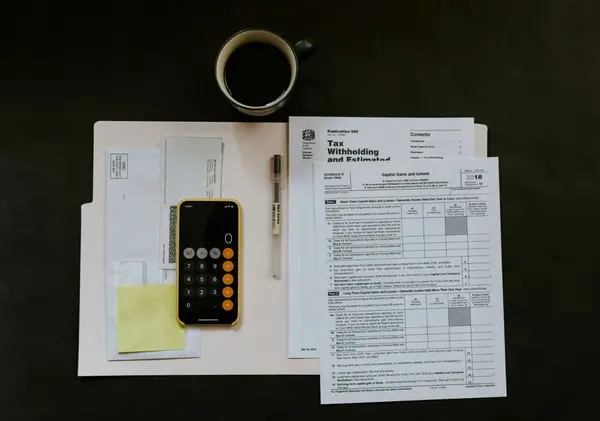
Here's what that means in practice. On a $550,000 home, you're likely paying $10,000 to $13,000 per year in property taxes. That's $850 to $1,100 per month added to your housing costs, on top of your mortgage, insurance, and HOA if applicable. The rate varies by county — Travis, Williamson, Hays, and Bastrop all have slightly different structures, and the city or MUD district layered on top affects the final number at the address level.
If you're coming from a state with lower property taxes and similar home values, this reshapes your monthly payment calculation significantly. I've had buyers pre-approved for a $600,000 loan who, after factoring in the real PITI — principal, interest, taxes, and insurance — realized their comfortable price point was closer to $475,000.
Run the full payment calculation early. Don't fall in love with a list price before you know what that address actually costs per month.
One additional note: Texas has a homestead exemption that reduces your assessed value by $100,000 for school district taxes once you establish the home as your primary residence. File it in the first year. It matters.
The commute math depends entirely on where you land
"Austin" in a job posting usually means somewhere in a 30-mile radius — and where you land within that radius can mean the difference between a manageable commute and a significant quality-of-life issue.
The major employment corridors are downtown Austin, the Domain and North Austin tech cluster — where Apple, Amazon, Indeed, and Visa have major campuses — the Round Rock and I-35 north corridor, and the growing southeast and east Austin corridors. Your office location should be one of the first filters you apply when narrowing down where to live.
If you're working downtown or in central Austin, neighborhoods inside the city — Hyde Park, Bouldin Creek, Mueller, East Austin, South Congress, Tarrytown — put you close enough to commute without getting on a highway. You're trading square footage and price per foot for proximity. The tradeoff is real but so is the convenience.
If you're working at the Domain or the North Austin tech corridor, you have the most flexibility. Cedar Park, Leander, and Round Rock are all 25 to 45 minutes in reasonable conditions. Pflugerville sits to the east and can work well depending on your specific route. Georgetown to the Domain runs 40 to 55 minutes on a normal day.
If you're working in Southwest Austin or near the Westlake/Bee Cave corridor — which is a significant employer zone for finance, healthcare, and professional services — then Dripping Springs, Bee Cave, and West Lake Hills deserve serious consideration. The tradeoff is that Bee Cave Road and 71 can be congested during peak hours, but the overall commute experience is generally more contained than I-35.
If you're working in Southeast Austin or near the airport, Manor and Pflugerville offer more accessible price points with reasonable drive times, and the area has been growing steadily with newer infrastructure following the population.
The short version: don't pick a neighborhood before you've driven your actual commute route at 7:45am on a Tuesday. The metro is large and the traffic patterns are specific enough that generalizations don't hold.
Summer is not just hot — it's a different lifestyle calculation
Austin gets a lot of credit for its outdoor culture — the hike-and-bike trail, Barton Springs, the greenbelt, the lakes. All of that is real. What the relocation guides understate is that from roughly mid-June through late September, being outside between 11am and 7pm is genuinely uncomfortable for most people not accustomed to it.
Daytime highs in July and August regularly hit 100 to 105°F. Humidity is lower than Houston, but it's not dry heat either. Extended heat events — multiple consecutive days above 105 — have become more common. The summer of 2023 set records that stood for decades.
This affects some things that matter more than you'd expect:
Your utility bills will be higher than you're used to. A 2,500 square foot home running the AC hard in August can run $300 to $500 per month in electricity. Some months more. This is a real budget line item.
If you have young kids, summer activity planning changes. The parks and outdoor spaces that define Austin's appeal from October through May shift to early mornings and evenings only. Pool access — community or private — becomes significantly more important to quality of life than it might be where you're coming from. When buyers with young kids ask me about neighborhood amenities, I ask about pool access before I ask about parks.
If you're an outdoor runner, cyclist, or generally active, this is a real adjustment. Most serious athletes here shift to early morning or evening workouts from June through September. It's workable, but it's a lifestyle calibration, not just weather trivia.
The flip side: November through April in Austin is genuinely excellent. Mild winters with occasional cold snaps, spring wildflowers along the highways, comfortable outdoor temperatures for months at a stretch. The trade is real and it tilts toward positive for most people — but go in clear-eyed about July.
School districts are hyperlocal, and the lines matter
Texas has an independent school district system, and in the Austin area, which district boundary you fall within affects both your kids' school assignment and, in many cases, your home's resale value.
Across the metro you're dealing with Austin ISD, Leander ISD, Round Rock ISD, Georgetown ISD, Pflugerville ISD, Lake Travis ISD, Dripping Springs ISD, and others depending on where you land. Each covers a distinct geography, and the boundaries don't always follow city or neighborhood lines the way you'd expect.
A few things worth knowing:
District boundaries don't always match city limits or neighborhood names. There are addresses in what people call "Cedar Park" that feed into Round Rock ISD. Parts of what gets marketed as "Georgetown" fall within Leander ISD. Always verify the actual district for a specific address — not the city name, not the subdivision, the address itself.
Within large districts, campus assignments vary by zone. The specific elementary, middle, or high school your kids would attend depends on where exactly in the district you land — and with rapid growth across the metro, rezoning happens. If a specific campus assignment matters to your family, verify it at the address level before you're under contract, not after.
If school assignment is a priority in your search, tell me early. It's one of the filters I apply from the start, and it meaningfully shapes which neighborhoods and subdivisions we focus on.
The new construction question
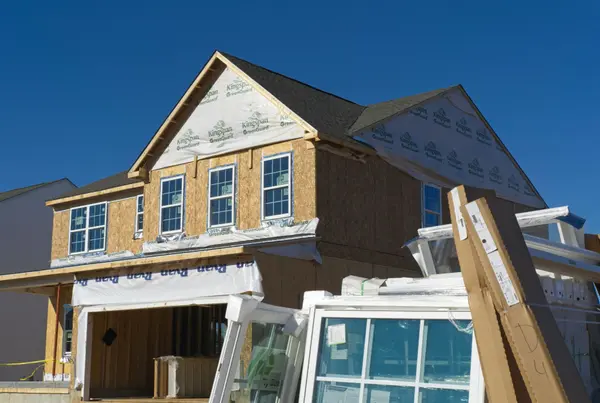
A large percentage of relocators end up seriously considering new construction, which makes sense: you get a known timeline, a builder warranty, modern floor plans, and you're not walking into a bidding situation on resale inventory. The major builders — Pulte, David Weekley, Taylor Morrison, Highland Homes, and others — have active communities across the metro, from Dripping Springs and Bee Cave in the west to Manor and Hutto in the east, and throughout the northern suburbs.
What relocation guides don't tell you is that buying new construction without representation is one of the more common financial missteps I see. The builder's sales agent works for the builder. Their job is to sell you a home at the best possible terms for the builder — that is not the same as your interests.
Having your own agent costs you nothing as a buyer — builder commissions are built into the pricing structure regardless of whether you bring representation — and gets you someone in your corner on upgrade pricing, contract terms, earnest money structure, and the inspection process. The inspection piece matters more on new construction than most buyers realize. "New" does not mean problem-free.
What most people don't regret
For all the nuance above, the majority of the relocators I've worked with are genuinely glad they made the move. The quality of life across the Austin metro for a household with strong income is difficult to match: a dynamic job market, relatively newer housing stock compared to coastal cities, no state income tax, and a cost structure that — even with the property tax reality baked in — tends to compare favorably to the markets most of these buyers are leaving.
The people who adjust best are the ones who picked their location deliberately, ran the real monthly payment numbers before falling in love with a list price, and understood that Austin is a metro still building its infrastructure to match its ambitions.
It's a good place to land. Just come in with the right expectations.
Categories
Recent Posts









JW Roeder