
Is It Cheaper to Buy New Construction or an Existing Home in Austin Right Now?

The short answer: in many parts of the Austin metro, new construction is genuinely competitive — sometimes even cheaper — than comparable resale homes. But the gap depends heavily on where you're looking, and "cheaper" doesn't always mean better value.
A few years ago this would have been a strange question to ask. New construction in Austin commanded a premium — builders had waitlists, buyers were bidding over list, and inventory was essentially zero. That market is gone. What replaced it is more nuanced, and honestly more interesting for buyers who know how to read it.
Here's what's actually happening, and how to think through the decision for your specific situation.
Why new construction got more affordable
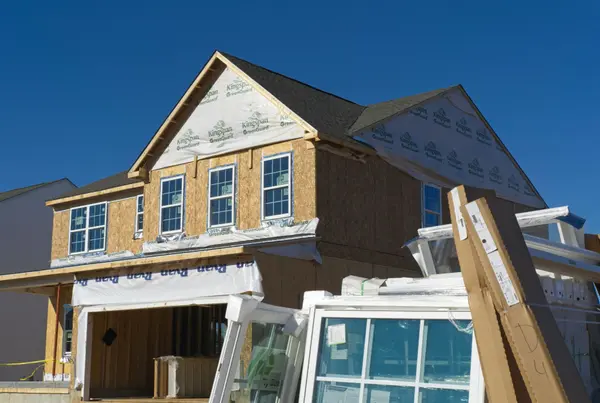
Between 2022 and 2024, builders in the Austin suburbs — particularly in Georgetown, Liberty Hill, Leander, Hutto, Manor, and Dripping Springs — added significant inventory to the market. Subdivisions that broke ground at the peak of demand are now delivering homes into a market where buyer urgency has cooled considerably.
To move that inventory, builders started competing in ways they almost never had to before: mortgage rate buydowns, closing cost credits, free upgrades, and in some cases, outright price reductions. The result is that a new-construction home in many suburbs now comes in at a lower effective monthly payment than a comparable resale — even if the list price looks similar — because the builder is subsidizing your rate.
A builder offering a 5.875% rate on a $400,000 home versus a resale at 7.0% means roughly $290/month less on your mortgage payment — that's real money, and it doesn't show up in the headline price comparison.
Where the new construction advantage is strongest
Not all submarkets are equal. The clearest value in new construction right now is concentrated in the outer-ring suburbs where builders have the most standing inventory:
In these areas, you'll often find move-in-ready spec homes with full builder incentive packages. The competition among builders — Taylor Morrison, Meritage, D.R. Horton, Pulte, and others all have active communities — keeps pricing honest.
Closer in — think Cedar Park, Round Rock, Pflugerville, or Bee Cave — new construction land is scarcer and builder premiums are higher. The value gap narrows significantly, and in some cases resale makes more financial sense.
How resale homes still win in several important ways
Lower price and a better rate don't tell the whole story. Here's where existing homes tend to have the real advantage:
If your priority is being in a specific Austin neighborhood — say, 78704, Rosedale, Mueller, or even established Cedar Park — resale is almost certainly your path. New construction simply doesn't exist at scale inside the loop or in the established mid-ring suburbs.
The builder contract catch most buyers don't expect
New construction feels straightforward until you're actually in the process. A few things that regularly surprise buyers:
You need your own agent. If you walk into a model home without representation, the builder's sales agent works for the builder, not you. That's a meaningful distinction when you're negotiating upgrades and contract terms.
Builder contracts favor the builder. Unlike a standard TREC resale contract in Texas, builder contracts are written by the builder's lawyers. Timelines, what happens if construction is delayed, warranty terms, and your recourse if quality falls short — all of it is defined by their documents. Having an experienced buyer's agent review those terms isn't optional if you want to protect yourself.
The "incentive" is often tied to their lender. That 5% rate? It's usually available only if you use the builder's preferred lender. You can still shop outside — and you should — but understand what you may be giving up to do so. Sometimes the rate difference is worth walking away from the builder incentive; sometimes it isn't.
I've negotiated builder contracts across all across Austin. The incentives are real — but so are the terms buried in the contract. Knowing which to push on and which to accept is where representation earns its value.
The practical decision framework
Here's how I'd walk a buyer through this comparison today:
If commute and location flexibility matter most, run the numbers on both sides with a specific builder community in mind. Get the builder's full incentive package in writing, have a lender run the payment comparison including their buydown, then compare to two or three comparable resales in the same submarket. The answer is usually in the payment, not the price.
If you need to be in a specific part of Austin, resale is your market. Focus your energy there — the opportunity in resale right now is better than it's been in several years, with more inventory and motivated sellers who've been sitting on the market longer than expected.
If you're relocating from out of state and don't have strong geographic constraints yet, new construction in the northern suburbs often offers the best combination of price, payment, and a frictionless process — which matters when you're coordinating a move from a distance.
The Austin market in 2026 doesn't give clean, universal answers. But it does reward buyers who come in informed, know what questions to ask, and have someone in their corner who's worked this specific market. The new construction vs. resale question is almost always answerable — you just need the right data and a clear read on your own priorities.
Categories
Recent Posts








JW Roeder